Franz Marc

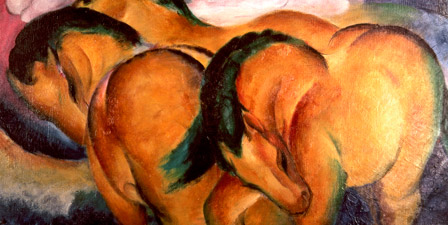
The Little Yellow Horses, 1912

Among World War I’s innumerable tragedies was the loss of one of my favorite artists, Franz Marc. Marc was born on February 8, 1880, in Munich, Germany and was a pioneer in the birth of abstract art at the beginning of the twentieth-century. Along with Wassily Kandinsky and others he founded the group “Der Blaue Reiter“. This group of artists believed in a spontaneous, symbolic, colorful, and especially expressive art. 
 
Marc had a spiritual view of animals, which is reflected in most of his paintings. These paintings draw me in with the respect and reverence he had for his subjects. His solid forms, beautiful lines, and wonderful use of color are aspects of his work that I have always loved. 
 
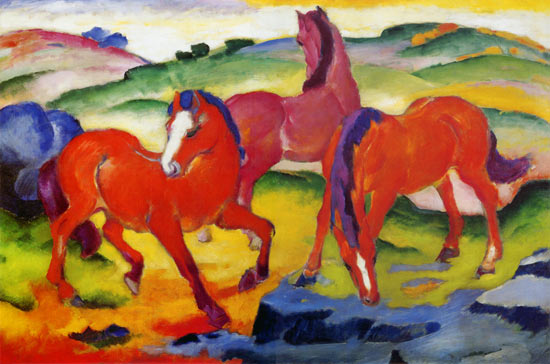
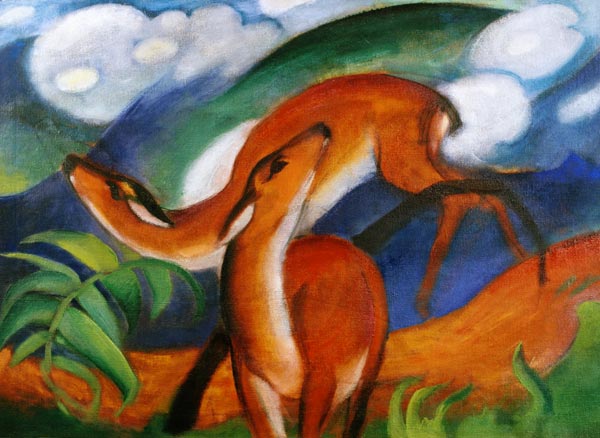
I regularly used two of Marc’s paintings when I taught elementary art: The Large Red Horses and Red Dear II.
 
A shell splinter killed Franz Marc during the Battle of Verdun in 1916.

 Today’s Franz Marc Gallery
 
The Large Red Horses, 1911
 
 
Red Deer II. 1912
 
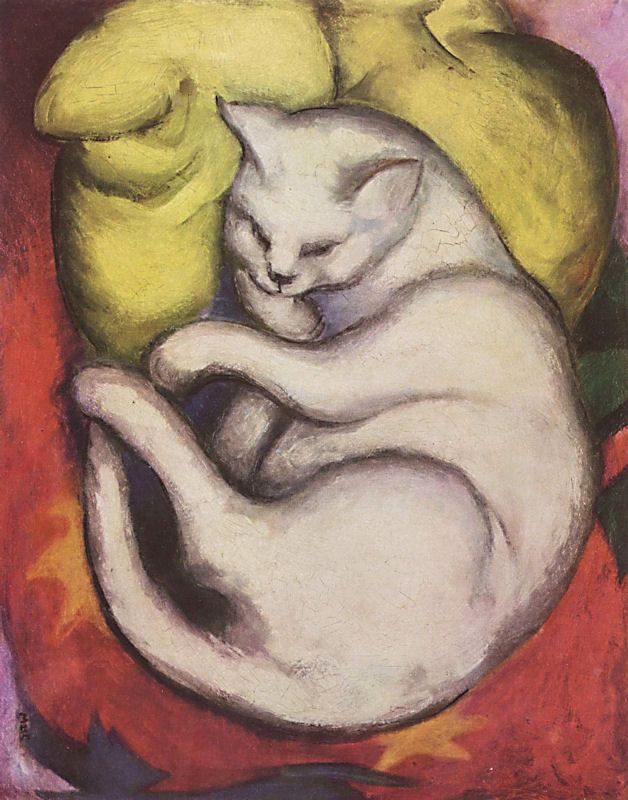
Cat On Yellow Pillow, 1912
 
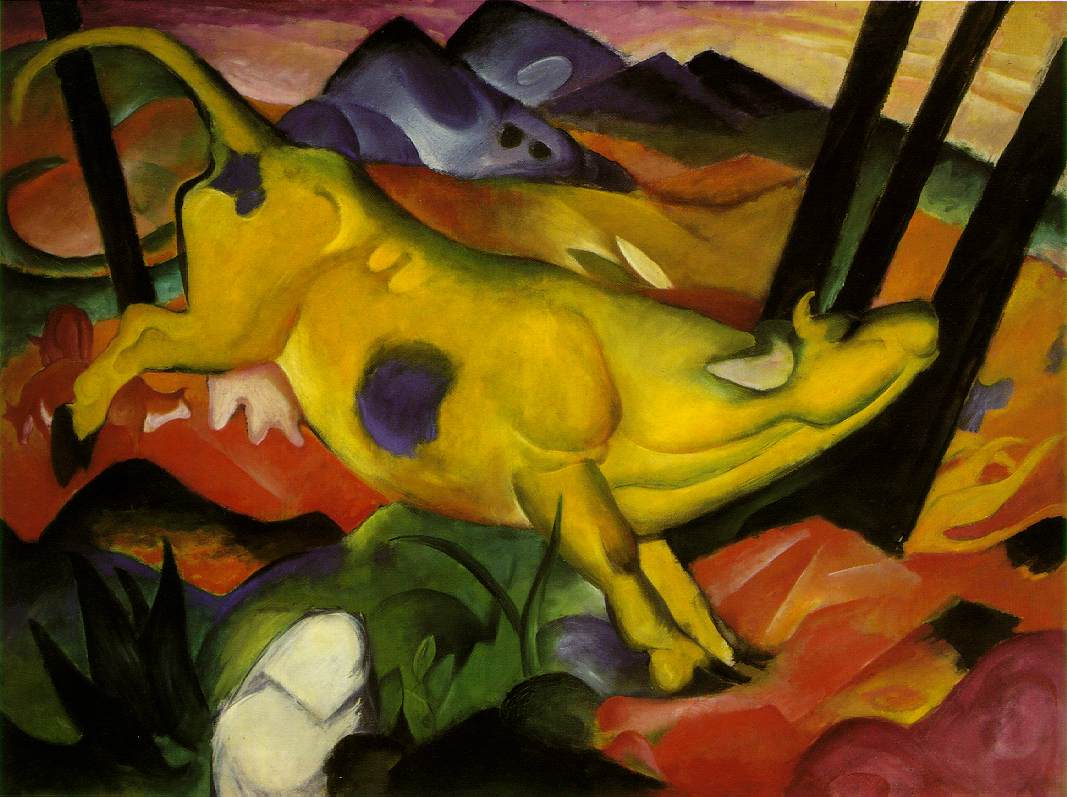
The Yellow Cow, 1911
 
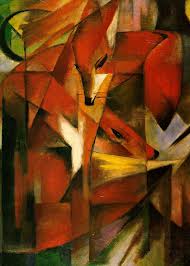
Foxes, 1913
 
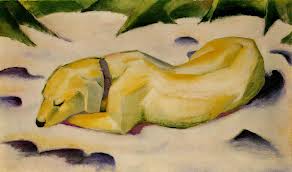
Dog Lying In The Snow, 1910/11
 
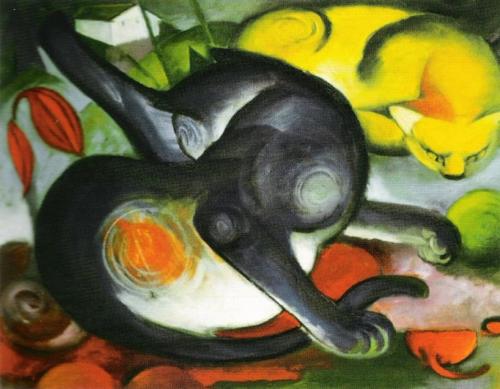
Two Cats, Blue And Yellow, 1912
 

Save

Poodle Time! Poodle Out This Halloween

I did add a bow to my carving.

Today’s post is an overview of some Halloween projects. The Halloween pumpkin has a link to instructions. Most, are idea inspirations. 

Start Halloween out  with a Poodle Pumpkin. It’s easy with the patterns that can be found on the Better Homes and Garden Website. There are 24 different dogs to choose from and they are all cute!

We usually have a family Halloween party and I like my dogs to look nice for it.  But, I want them to look like themselves and not some bug, pirate or a bowl of spagetti.  

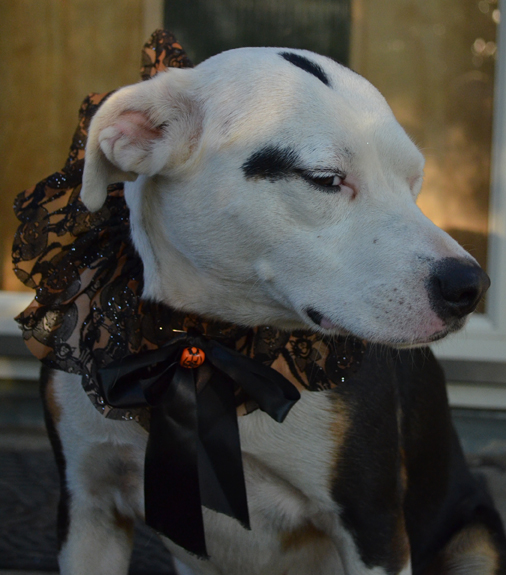
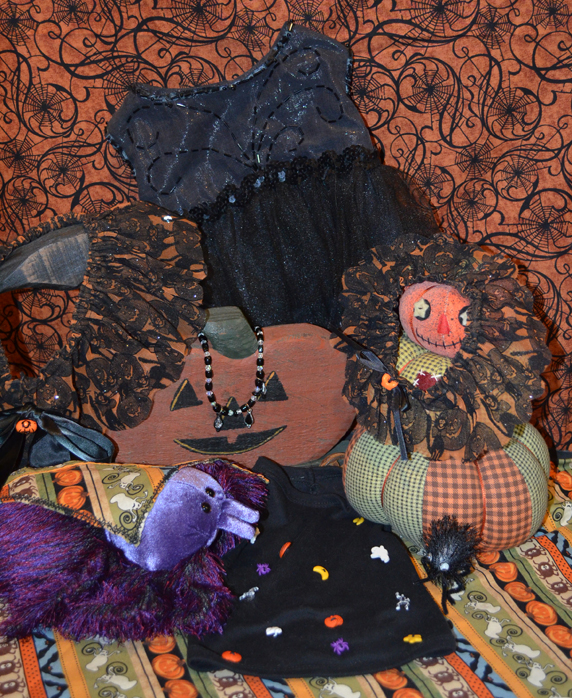
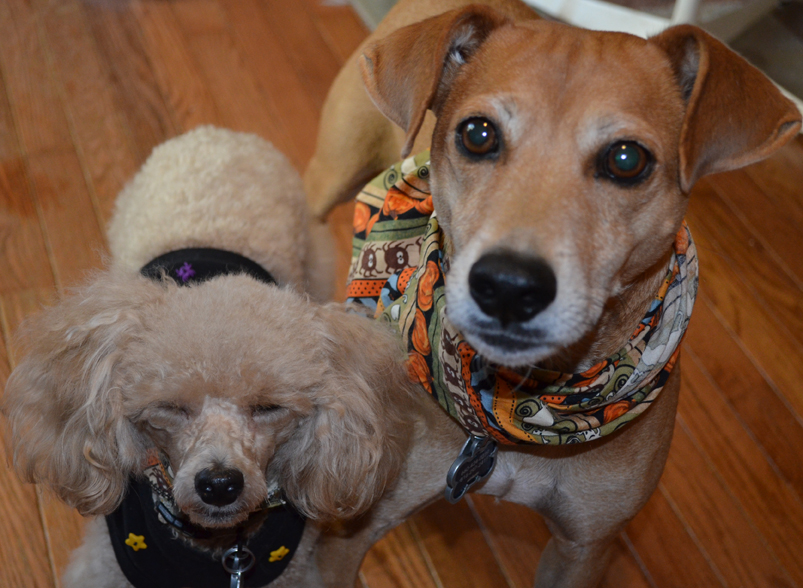
Sophia and Niko’s bigger brother and sister are going to help model these styles today. Most of my ideas are easy. Sophia’s dress would need some sewing experience. But black dresses are easy to find and decorations could be added to them for the occasion.


Sophia, In her Halloween costume-a basic black dress and a Halloween bow. 

The neck ruffle, made of tulle, is a separate item that can be worn by itself. Some years she wears only a necklace with the dress. The necklace is in a photo below. I used beads from Wal-Mart.


Big sis Penny is modeling a ruff for bigger dogs. 

The larger picture show off the tulle. I purchased this material 


from Hancock Fabric but every store has a great selection around this time of the year.  


The edge is just cut into a big scallop and not hemmed. Make the length about 50% longer than your dogs neck. Cut the elastic with about and inch ease and don’t forget to add for the overlap. Decorate with anything you want. I had remments of black ribbon and and old pumpkin button. 
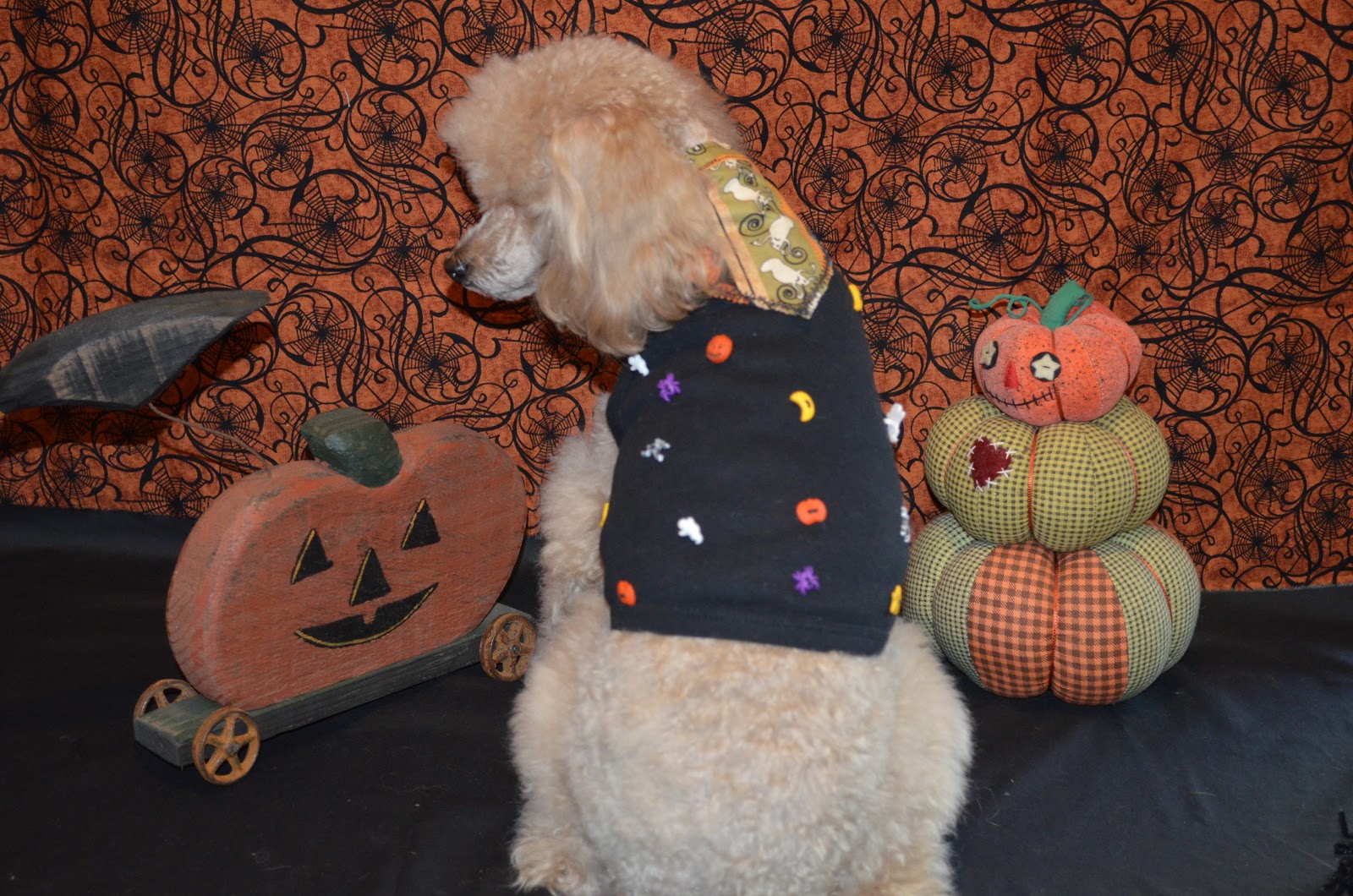
Niko is modeling a simple black T-shirt with Halloween buttons that I attached.  The shirt and buttons came from Hobby Lobby. This is a quick and simple answer for a well dressed gentleman. He also has a simple bandana made with a triangle with a band and velcro. Dharma Trading Company is the place

 to get a shirt for you kids from 4-86 pounds and there is a 14 color selection. This is an easy project.  Iron on appliques would also be good for this project. But that is a subject for another day.


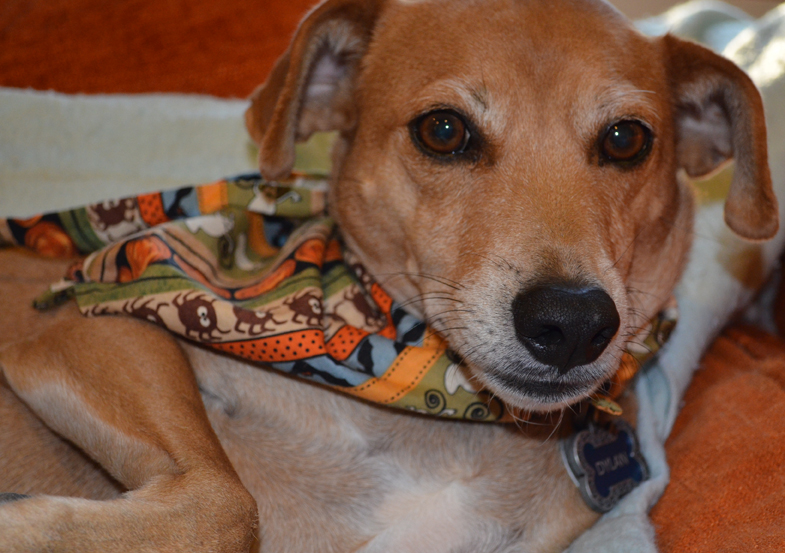
Our Mountain Fiest, Dylan is modeling my first attempt at a Halloween bandana.  I just made a triangle that ties; but I don’t like bulkiness of the triangles and will only make banded scarfs with velcro from now on.  I also learned a lesson about not making bandanas to long. Dylan decided to chew the tip off his. I had to improvise a new ending. Live and learn, as they say.
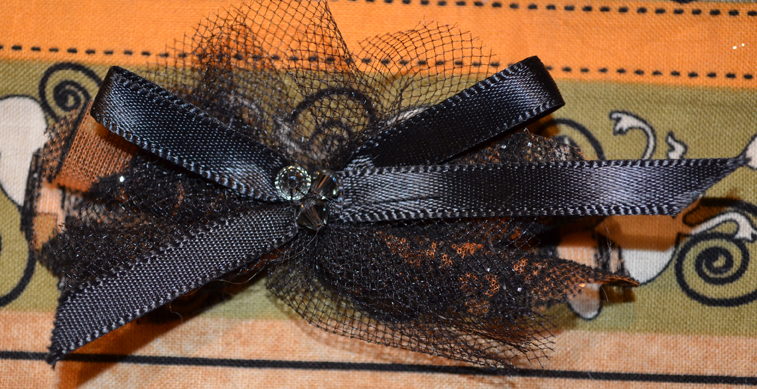
A closer view of the Halloween bow.  Bows are one of my favorite things to do.  This one has four layers: tulle, netting, ribbon and Swarovski crystals. I start with the botton layer and work my way up.  Everything is tacked together with thread.  I sew a grooming band on the back.  I think bands are more secure, but a little more difficult to get in Sophia’s hair. But they stay in. A clip would also work.
The Halloween Lookbook
“We are all dressed up and lookIng good, so TREATS PLEASE”


Save

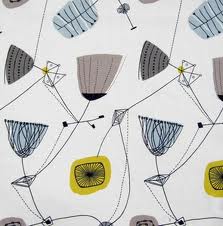
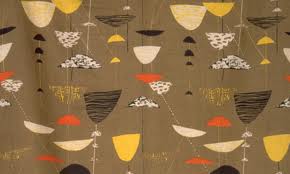
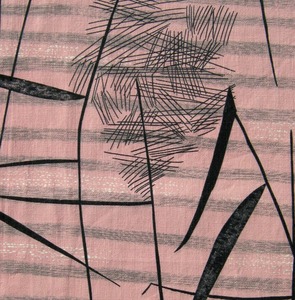
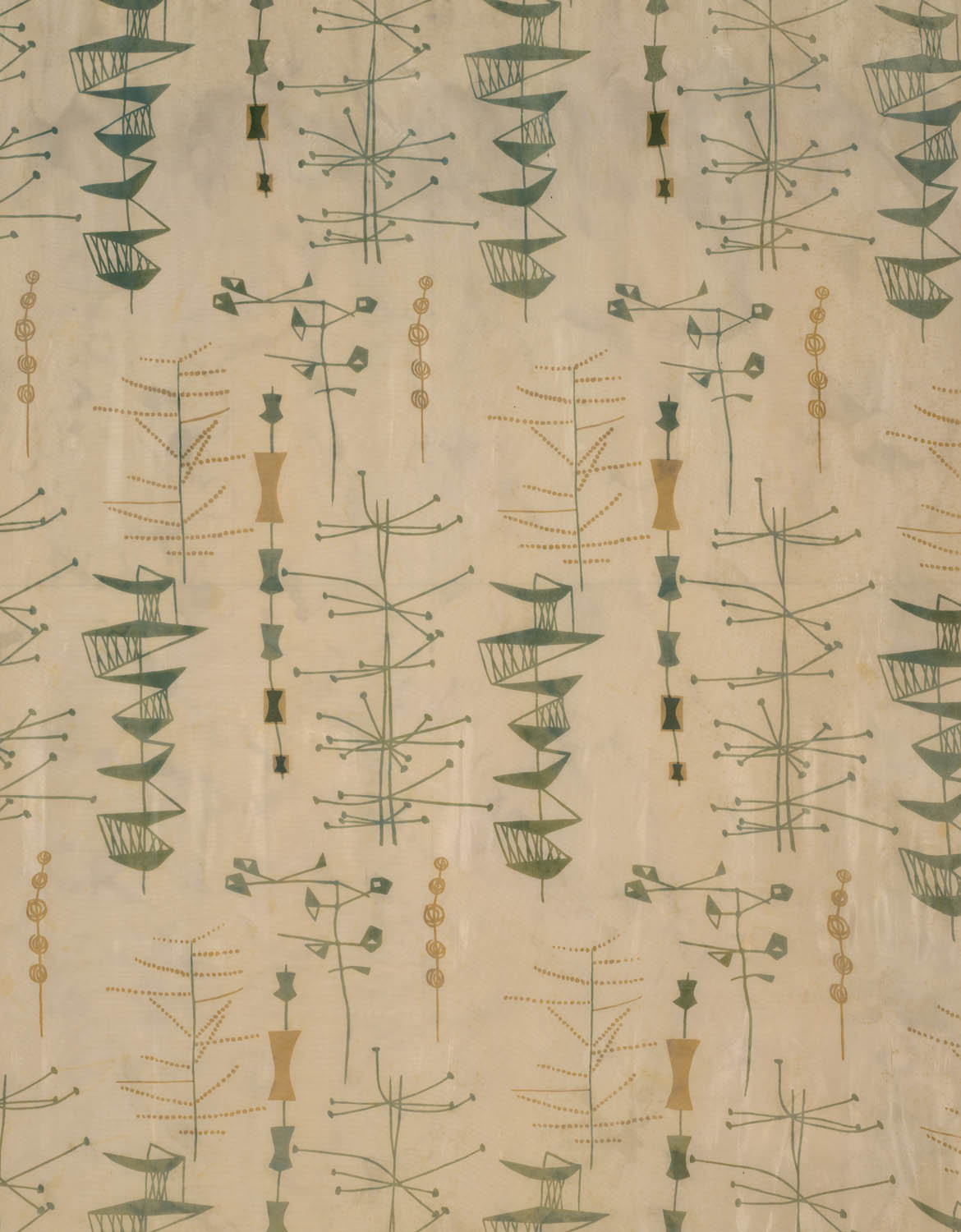
Lucienne Day-The Geometric


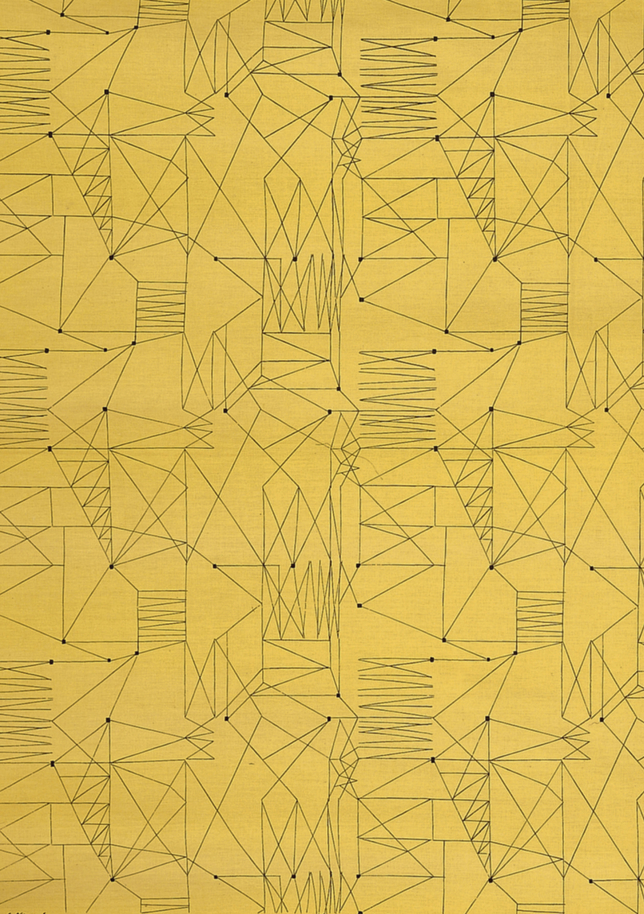
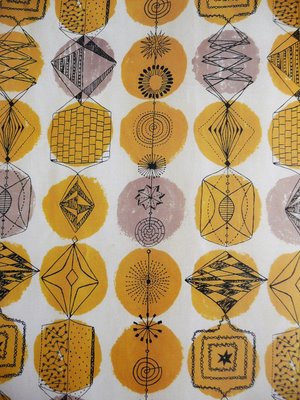
“Lines”-a pattern created for Heals, a fabric design house in Britian

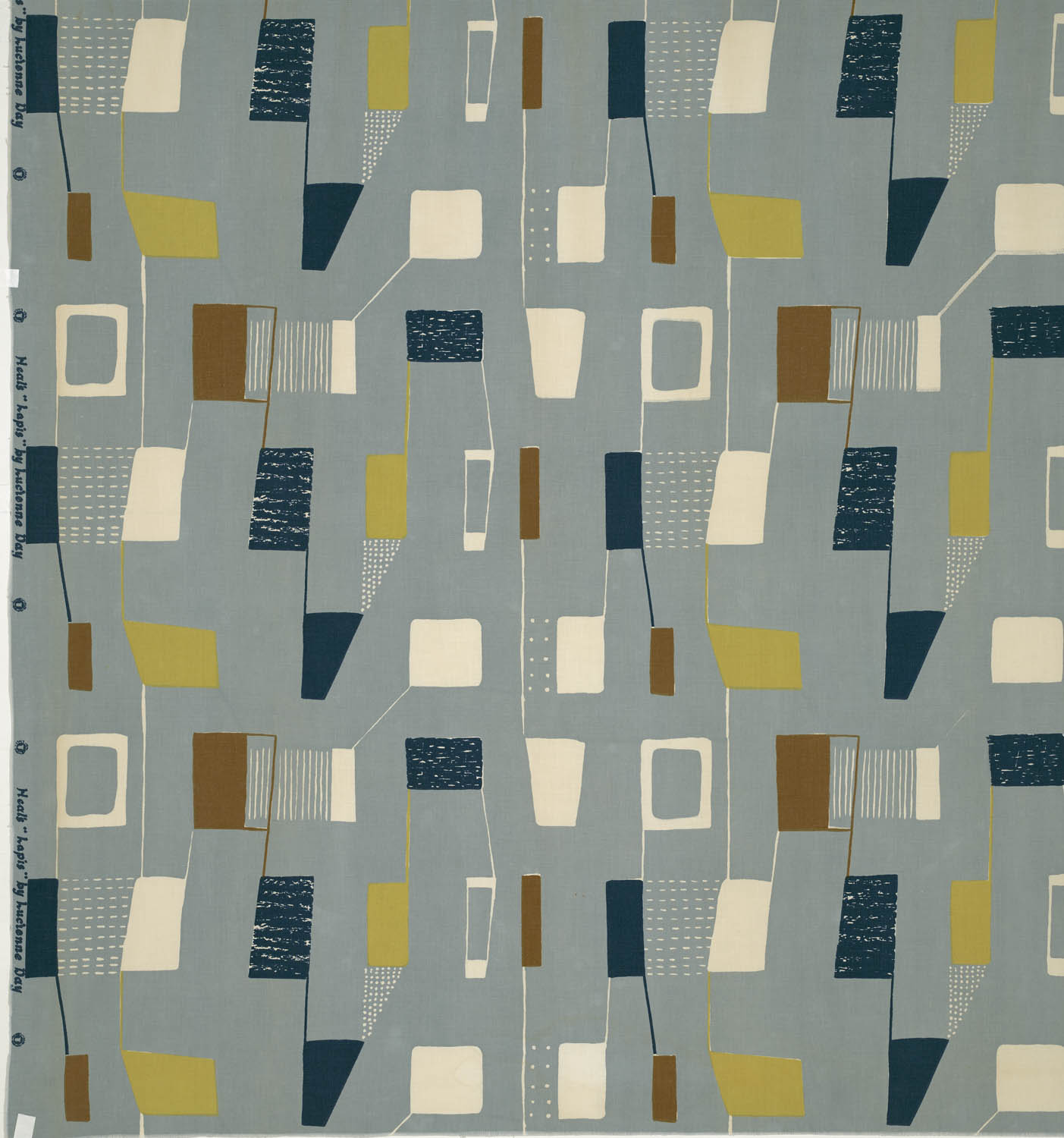
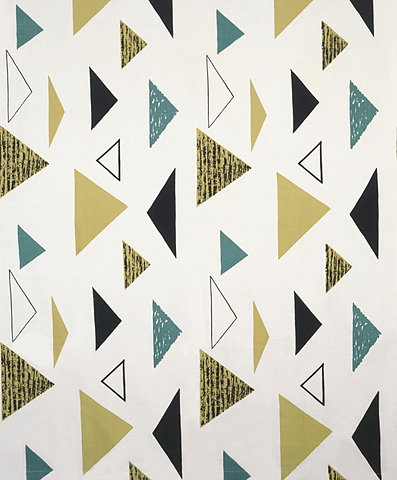
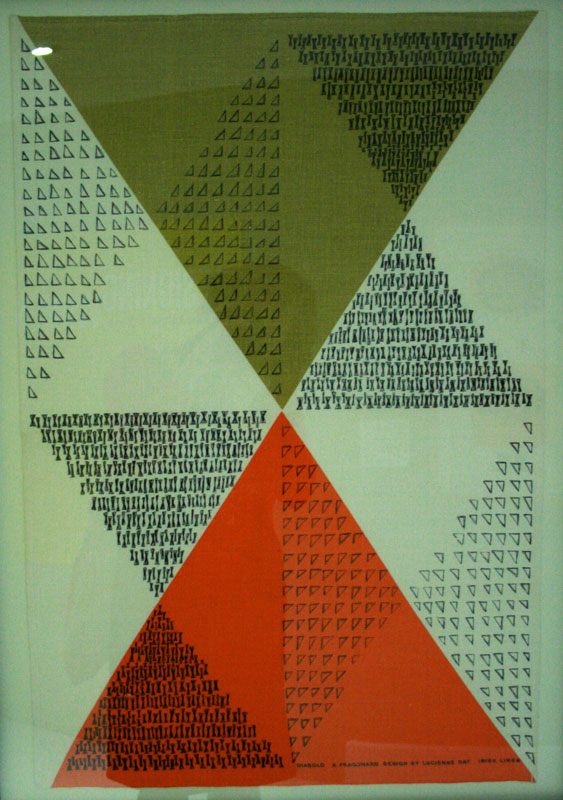
Non-objective is pure design. We are not associating the images with anything we think we know. Only The Elements of Art* are referenced. Lucienne Day was inspired by these basic elements. This post is devoted to some of these pieces .

Lapis, 1953
Miscellany, 1952

Cockaigne, 1961

Diablo, 1962

Lucienne Day had a long career with a huge portfolio. This is my fourth and probably not last post showcasing her work. She is hugely inspirational for me as a designer. 

*  The Elements of Art are like the ingredients that a cook uses to create a dish. Artists use these to create a works of art. The These elements are: line, shape, space, form, color, texture, and value.

Previous posts:

  1. My first post and introduction of Lucienne Day. This post covers her groundbreaking design “Caylx”.
  2. The Orange Look-book has some of her orange hued inspired designs.  This post was in conjunction with the color Tangerine Tango, Pantone’s color of the year.
  3. Some of her work that was directly inspired by nature will be found in this post.

Save

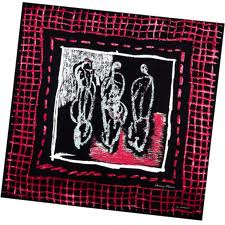
Who Designed That Scarf?-A Brief Overview of Ascher Fabrics

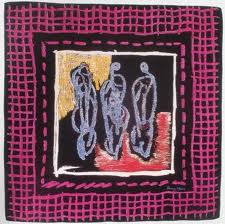
Henry Moore, Standing Figures (1946)


Zika and Lida Ascher met when she was hired as a designer for his family’s textile business in Prague. They were married in February of 1939 and honeymooned in Norway.
During their Norwegian honeymoon, Hitler invaded Czechoslovakia. The Aschers then made a life changing decision to immigrate to Britain and settled in London.
In 1941, Zika Ascher joined the British army. While he was away, his wife started a small textile company. She designed a few prints that were used by the courier Capt. Edward Molyneux.
In 1942, Zika Ascher was invalided out of the army and came home. The Aschers then proceeded to establish a very respected textile company that is still in business today.
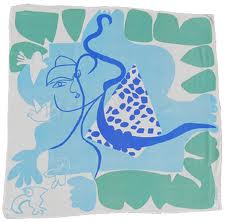
During the mid 1940s, Zika Ascher had a great idea of creating silkscreen scarfs and didn’t want just any designer. He approached major artists of the day and asked for their contributions and most of them said yes.  
 
Ascher collected scarf designs by Henry Moore, Henri Matisse, Jean Cocteau, Alexander Calder, and Cecil Beaton among others. The company continues to produce upscale scarfs and fabric today. 
 
Scarf Gallery 
Jean Cocteau, Visage (1947)
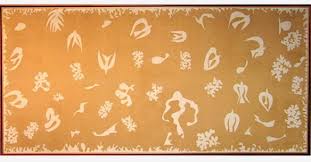
Henri Matisse, Oceanie (1947)-This scarf  sold for $4.8 million at Christies. There
were only 30 produced and this particular one had hung on Zika Asher’s studio wall. 
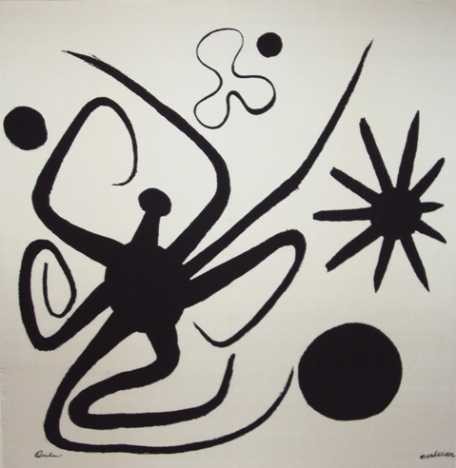
Alexander Calder, La Mer (1947)
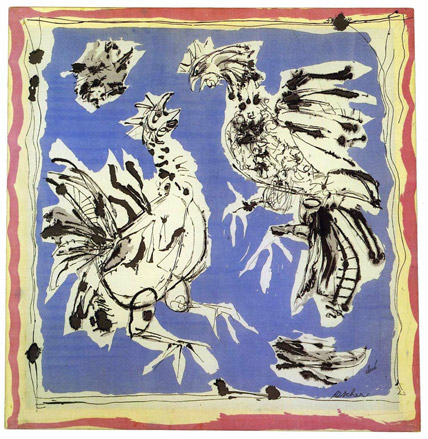
Antoni Clave, Combat de Coqs (1947)
Francoise Gilot, Quatre Oiseaux (1947)-Although Picasso never directly designed a
scarf for the Aschers, this one was submitted by is companion at the time. Hummm………….
The Ascher company has a great website with timelines, galleries, and information. I enjoy visiting it and just looking around.  
 
And speaking of wearing scarfs. Here is a wonderful video put together by Wendy’s Lookbook on ways to wear a scarf. 

Save

Poodle Time!-Poodle Fabrics At Spoonflower

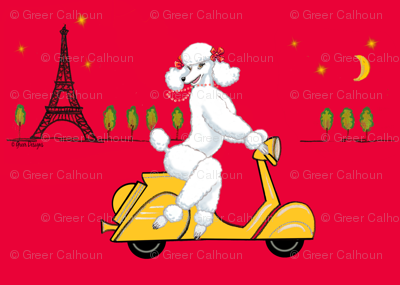
White french poodle scooter by Greerdesign

 
This summer, I ran across a very interesting web site. I was window-shopping on the Internet for interesting Poodle fabric and came across Spoonflower. The fabric is very unique and designer oriented.
This web-site is not just a place to shop. A person can create their own fabric designs. The instructions say to upload a file and Spoonflower will show you how your design will look with various repeats. There is also a variety of fabric that it can be printed on. These range from cottons to silks. A designer can have an individual shop to sell their fabric designs or the design can be kept private and not sold.  It is up to each individual. 
 
 On each caption I have the name of the fabric and the name of the designer’s shop that can be found on the Spoonflower site. 
If you are buying one of the designs, you have the same pick of fabrics. I have not gotten anything yet so I cannot vouch for the quality. My gut feeling is that it is good stuff.  
 
Some More Examples of Poodle Fabrics that can be found at Spoonflower.
 
This is just a small sampling. There are many more on the actual site.   
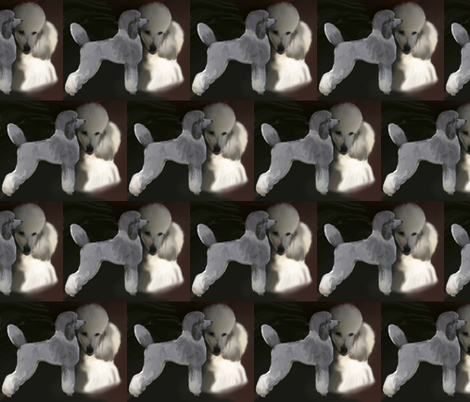
Poodles in grey and white by Dogdaze_
 
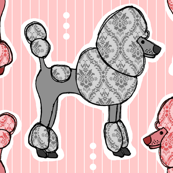
Prized poodles – pink & pewter byDianef
 
Poodles in the park – cornflower byTuppencehapenny
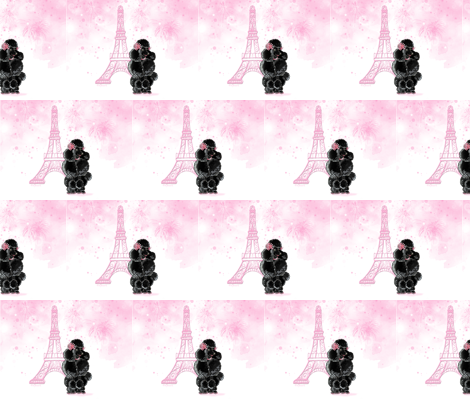
Black french poodle pink eiffel tower byGreerdesign
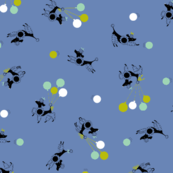
Poodle polka dots from the alphabet according to starfish byWww_nataliestarfish_com
For me, this was a great find.  I don’t know if anyone needs Poodle printed fabric, but if you do Spoonflower would be a great place to look.  Or maybe you can even make your own print!  I’m thinking about it…………………….
 
Until next week, Good-By


Save

Poodle Time!-The Sculptural Poodle

It is time for another Poodle Art Wednesday. I have gathered a few sculptures inspired by Poodles.  There are the traditional to the modern styles represented.  I hope you enjoy my picks.

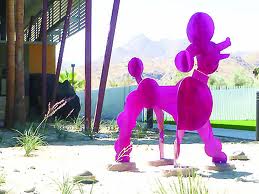
Pink Poodle sculpture that can be found at the Palm Springs Humane Society


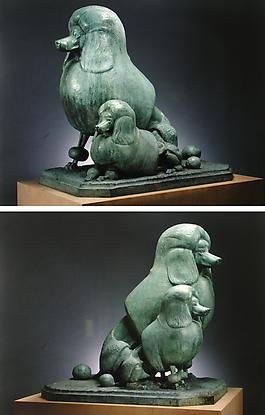
Standard Poodles, by Louis Paul Jonas, Bronze, 1948
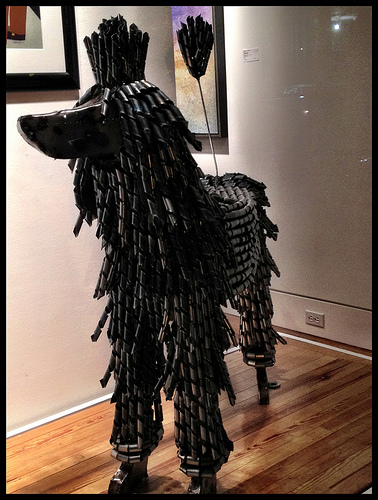
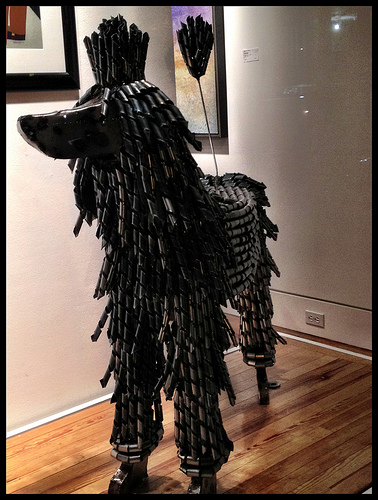
Black metal sculpture by Keith Bradley. This artist works out of Florida.
Poodle marionette created for April 2008 editorial for British Vogue, photographed by Tim Walker.


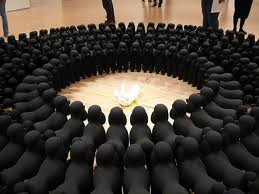
Kind mit Pudeln (Baby with Poodles)

1995/1996

sculpture | plaster, foil, polyurethane, and paint

Source: http://www.sfmoma.org/explore/collection/artwork/17435#ixzz28u6yfPPE San Francisco Museum of Modern Art
This one, to me is very interesting.  I have included a link to the museum discussing the installation. 

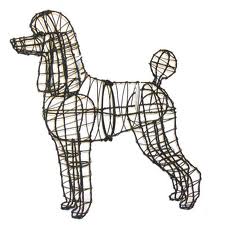
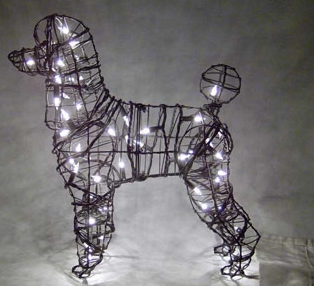
A Poodle Topiary-This could be used as a sculpture.  The cost would be more reasonable that a fine art
art sculpture.
Add lights to have more fun.  These topiaries can be found at Pampered Paw Gifts.
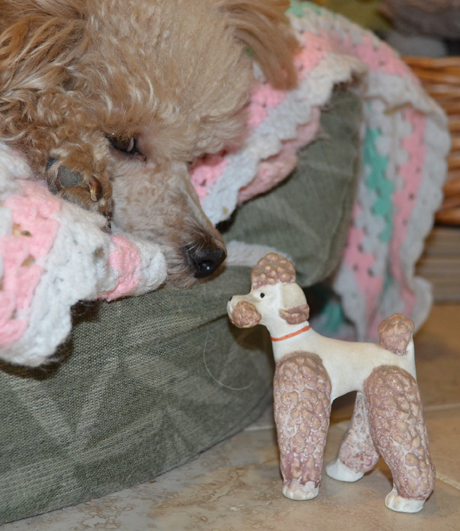
But does it play?-face it Mom, a real Poodle is a a whole lot better than some sculpture!
(Don’t worry, I know that Niko)
 

Save

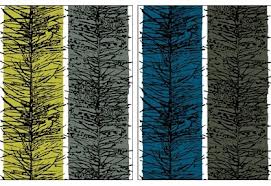
Lucienne Day and Nature

“Plants and the sense of growth was a very strong inspiration for me”-Lucienne Day
 
Today’s post starts out with a quote from one of my favorite designers, Lucienne Day.  With this quote in mind, I have put together a Look Book of  some of her designs that definitely have a nature and growth influence.

I have to revisit Calyx, her breakout design first published in 1951


Tarn
Fall
Flowers
Climbing Trees
Perpetua
Larch

I have four posts about Lucienne Day.  My first post, which is a good introduction to her can be found here. The second post covers work that she created in orange. The last post talks about her pure non-objective works.

Save
Poodle Time!-Happy Birthday Poodle Style

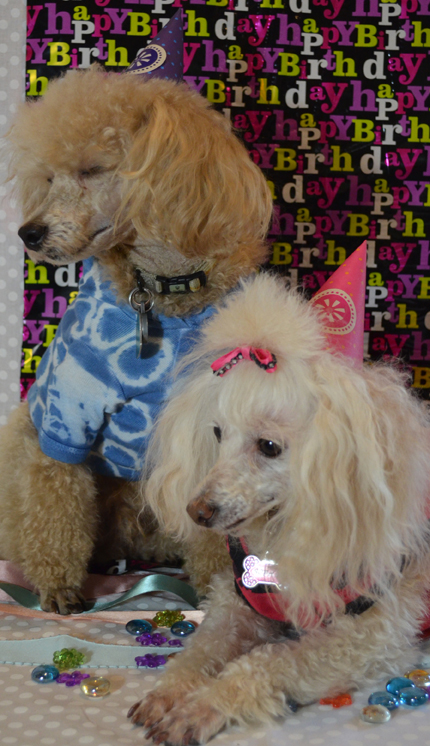
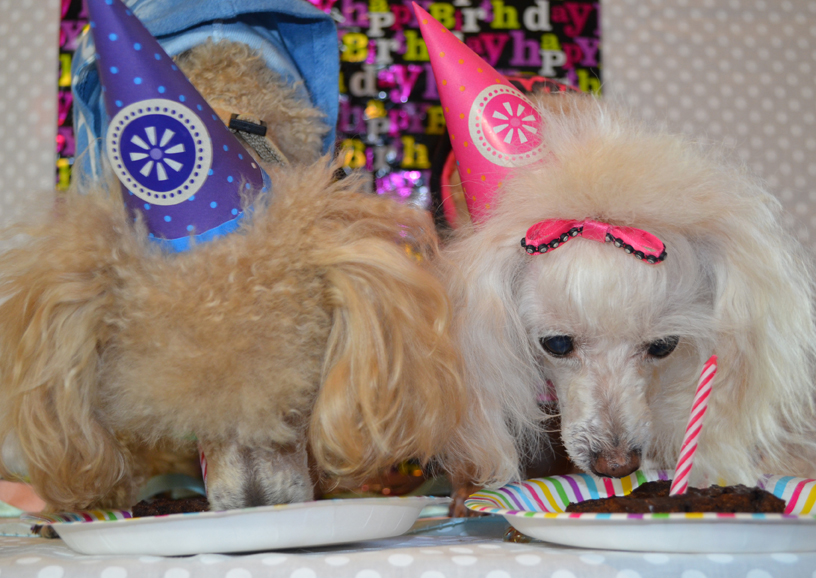
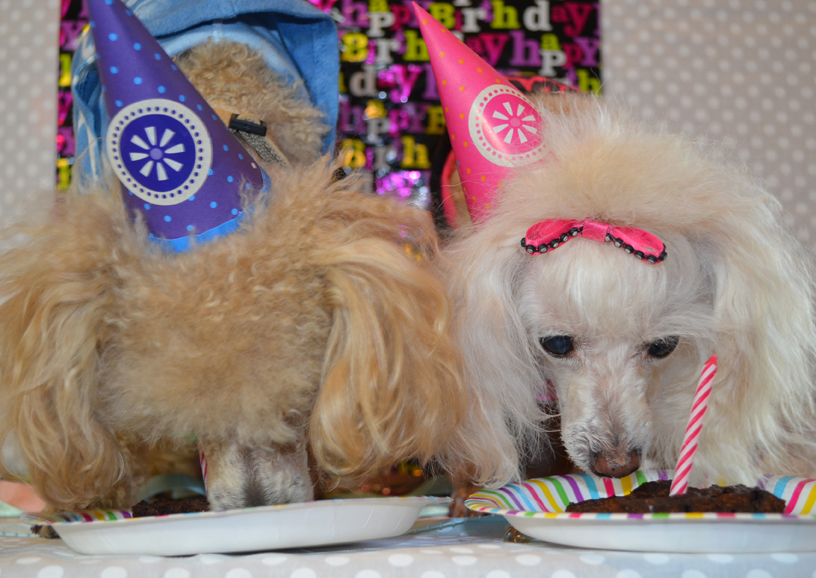
Last Sunday (30th) was Sophia’s 3rdYear Celebration.  I say celebration because she is a rescue from the Missouri Puppy Mill system and there is no real way that we could ever know how old she is. But, we are saying she is six this year. It is as good an age as any.

But since we had a little birthday party, I am doing Poodle Birthday today. 

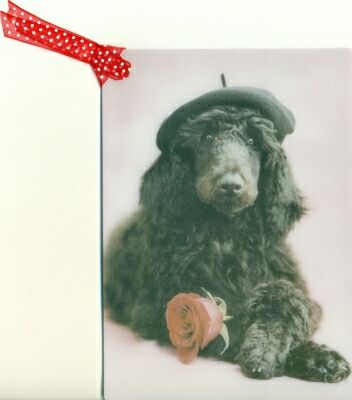
Starting out with a Birthday Card from Inky Paw-one of many cute ones


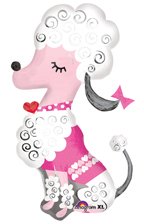
Mylar Poodle birthday balloon from Balloon Party Place
order through Amazon
“Fifi and Pierre” Paper Napkins from  Inky Paw
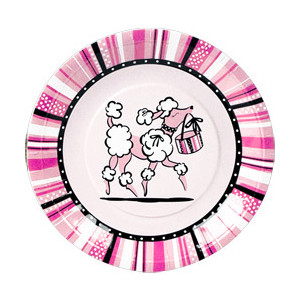
Shopping Poodle paper plates from Poodle Gifts-there are also cups and napkins to match


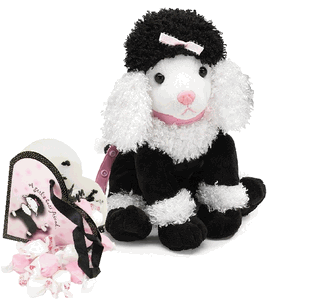
The Parti Party Poodle-sorry couldn’t resist-cute little stuffed poodle with a tote of salt water taffyfound at CandyCrate.com
Sophia’s Birthday
OK, when is this party going to start?


Now this is looking interesting.


I know it is HER birthday and I must be a gentleman, but…………


NOW, this is more like it.
I have the Brownie recipe and a review of the cookbook it is from on a separate post.  You can find it here. 
Poodle Time!-Sophia’s Birthday Brownies

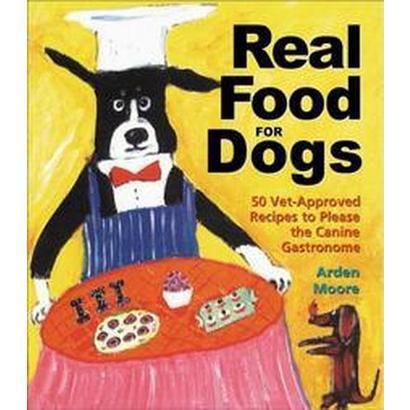
Sophia’s birthday brownie is a recipe that can be found in the book Real Food For Dogs. It’s a book that I have had for a few years and I think it is one of the better cookbooks for dogs. 
Recipes are vet approved and my dogs seem to really like everything they have tried. This time around, I had to make some changes to the brownie recipe. I will add my changes at the end of the post. 

This is a very good book if you are looking for some options for home made dog food.  I do buy regular dog food, but occasionally like to treat everyone to something special.  

This book can be found at Amazon and you can actually see some of the recipes (including the Bow-Wow Brownie
in Amazon’s preview feature.
Bow-Wow Brownies
½ cup vegetable oil (I used Canola)
2 tablespoons honey
1 cup whole wheat flour*
4 eggs
1 teaspoon vanilla
½ cup carob chips
½ cup carob powder
½ teaspoon baking powder
1.Preheat the oven to 350’ F.
2.In a medium-sized bowl (I used my mixer) blend oil and honey thoroughly using a wooden spoon.
3. Add the remaining ingredients and mix well.
4. Pour into a greased 15- by 10-inch baking sheet.
5. Bake for 30 to 35 minutes.  I will warn you, it is very bubbly while it is cooking.
6. Let cool, and then frost (I never do) if desired.
7. Cut into bite-size squared and store in a sealed container in the refrigerator
Optional Icing (I don’t do the icing)
12 ounces fat-free cream cheese
1  teaspoon honey
1  teaspoon vanilla
1. In a small mixer, blend all three ingredients.
2.Use a spatula to spread the frosting over the pan of cooled brownies.
* I found myself Sunday without any whole wheat flower.  However, I had wheat germ and white rice flower. I used ¼ cup wheat germ and ¾ cup rice flour. I am now thinking about experimenting and making a gluten free brownie.  I would prefer brown rice flower and will look for that next time I go shopping at my health food grocery store. 

Bow-Wow Brownies are Poodle approved.


Josef Albers-Color Theory’s Giant

Josef Albers
“The Man” When It Comes To Color

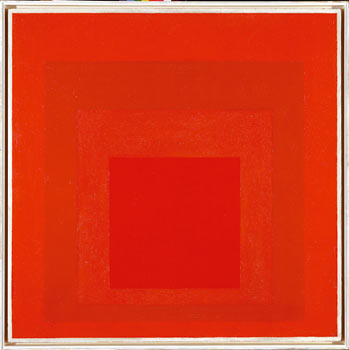
Red and Brilliant Yellow
           
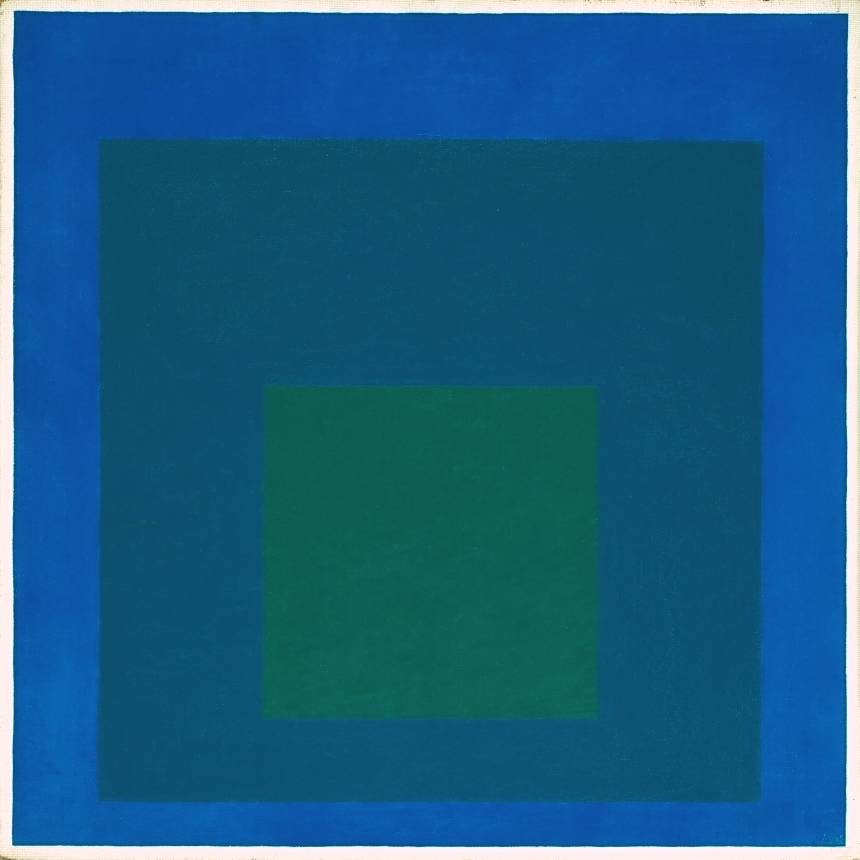
     Josef Albers is a name many dedicated artists may know.  For more than twenty-seven years, Albers created thousands of paintings based on images of layered squares of pure color. On the backs of these paintings, he even thoughtfully listed the hues used. He entitled this massive study “Homage To A Square”. 

     These paintings and his study of color revolutionized how people understood color relationships and how teachers taught color theory. Instrumental in this was his 1963 published work Interaction To Color.

      Joseph Albers didn’t start his color exploration until the well ripe age of 61. By then, he was already a well-respected artist.  Starting in the Bauhaus, he moved to the United States when the Nazis closed the school. While in the U.S., he was head of the art department of Black Mountain College near Asheville, North Caroline and later head of Yale’s Art Department. If you want to read more about Josef Albers, The Art Story has a very nice synopsis of his life and work.

      He was married to Anni Albers, a well-respected weaver in her own right. Anni Albers will be featured shortly on the Journal.  
Just A Few More Squares


Between Two Scarlets, 1964
Study for Beaming, 1963
From The Soil, 1962

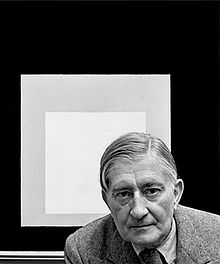
Portrait of Josef Albers
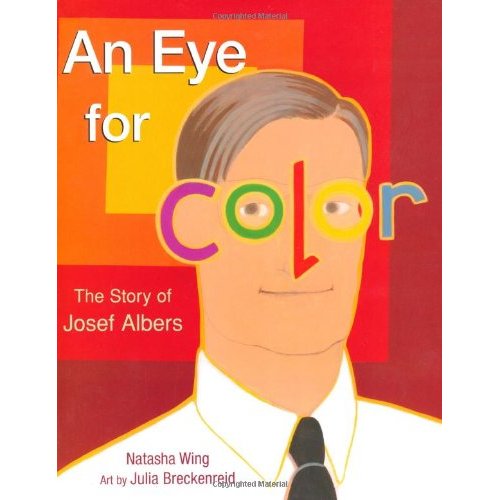
     There is also a wonderful children’s book about his life and work: An eye for Color by Natasha Wing. It is available on Amazon.


Design a site like this with WordPress.com
Get started