Joplin-Hope and Healing

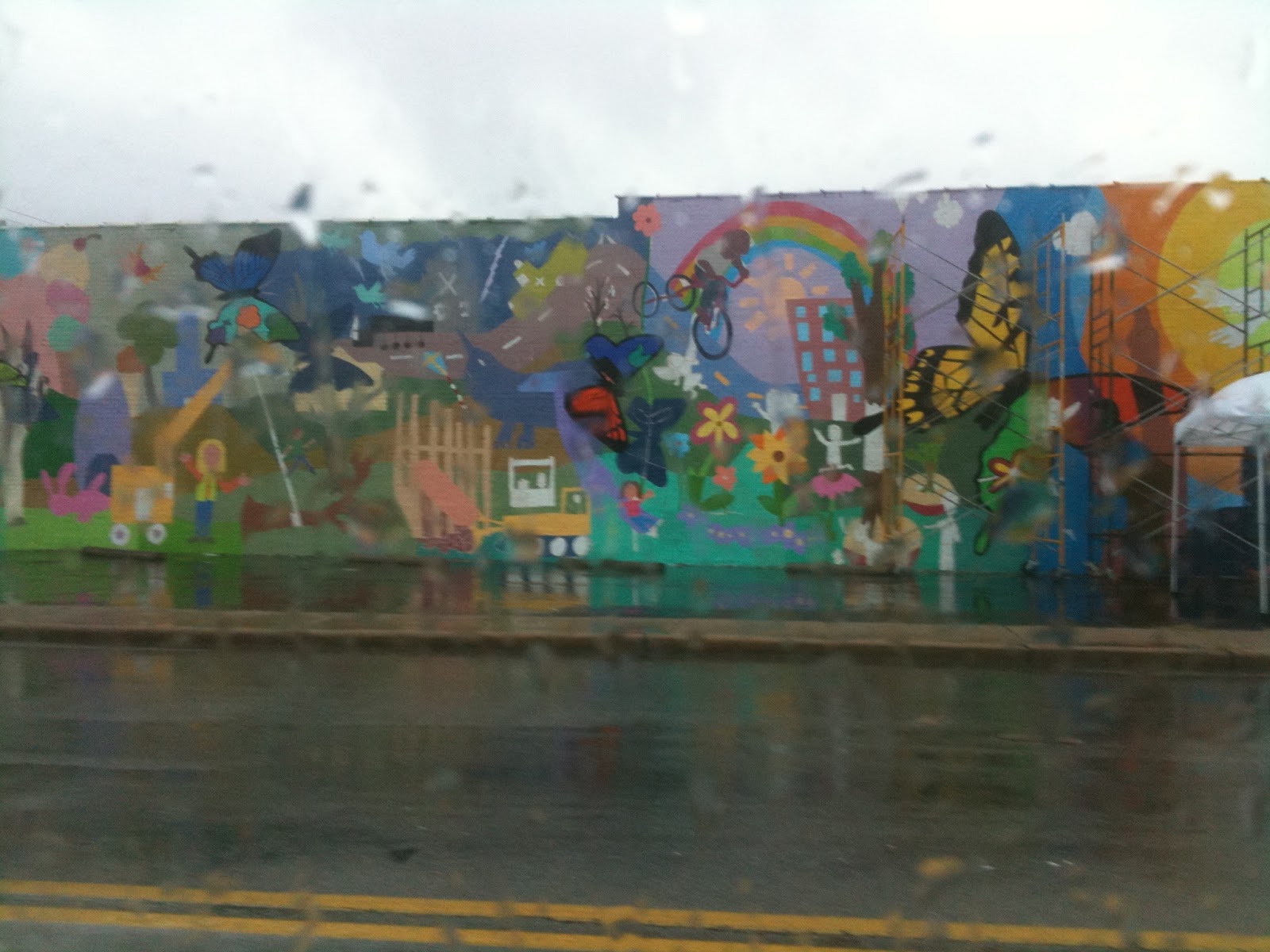
Mural of Hope-15th and Main, Joplin, MO-taken on a rainy afternoon last October with my iPhone-so not the clearest

Today’s extra blog is dedicated to the people of Joplin.  I know that the year anniversary of Joplin’s tornado is today. But the one thing I will always remember is that it was a Sunday.


I have been to Joplin many times since that defining day. Throughout this tragedy, Joplin has shown its mettle. The people in this town are tough. They are survivors.  I will forever respect the leaders and citizens of this old town.

But another thing has caught my attention.  And that is how the arts have been one of the healing powers for people who have faced difficult circumstances. 

The Mural of Hope, located at 15th and Main was one the the first pieces to rise. This work was started and  finished last fall.  It was initiated by a public art group called The Tank.
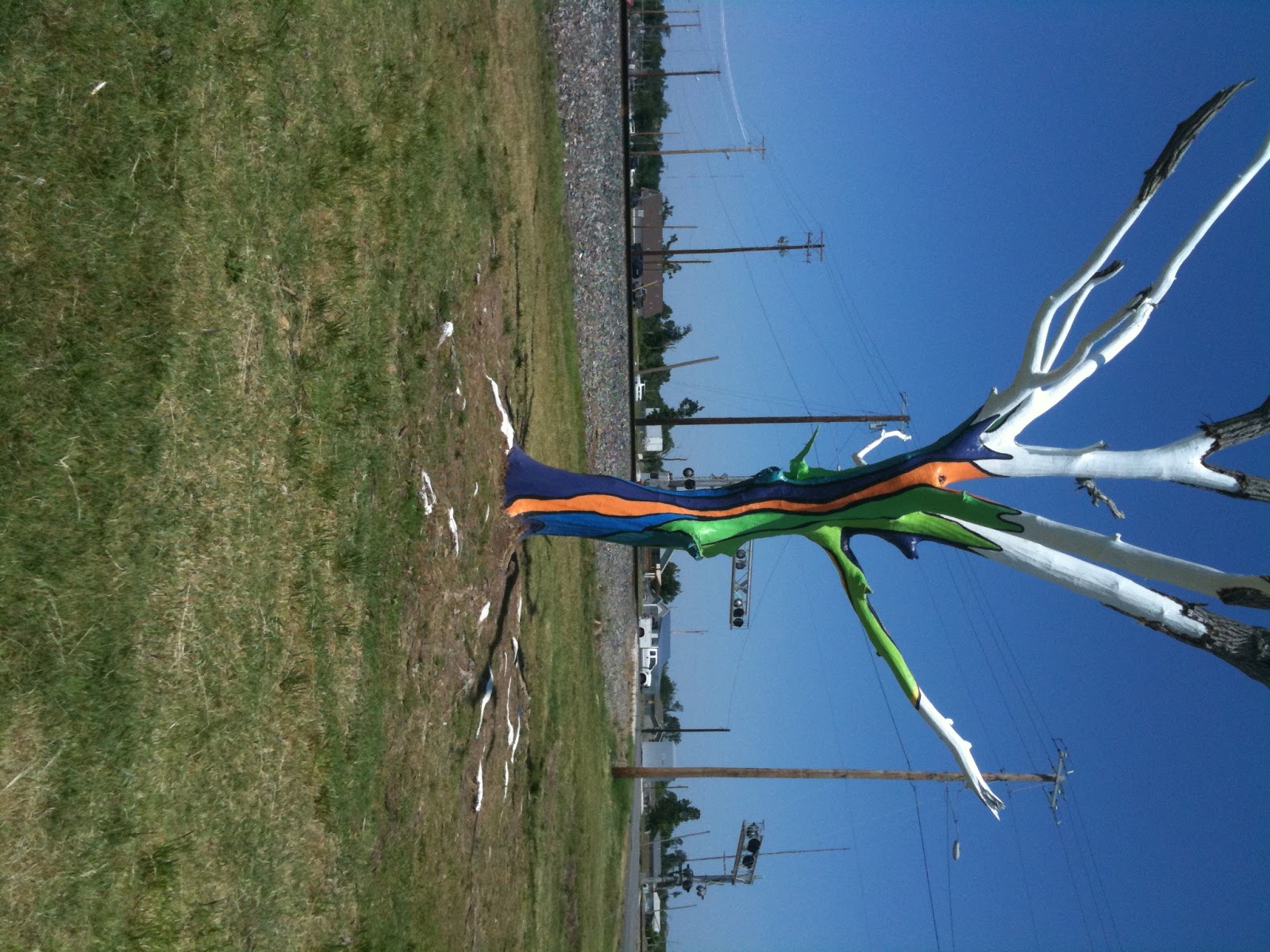
 The Tank has also started to create the Spirit Tree.  This work is inspired by the spirit stick of the Native American medicine man. The group hopes that the tree will serve as inspiration for the survivors of the May 22nd  tornado. The tree is located on 20th street by Dillon’s (destroyed grocery store) parking lot. The full article from the Joplin Globe can be read here


718b0-img_0844
The Spirit Tree as of 5/21/12. I stopped by before I left town and took a picture with my iPhone

I know the citizens of Joplin have been amazed and blown away from the world’s concern and generosity. People are still coming to help.


One way  the survivors have been able express their gratitude is through Dear World, From Joplin With Love. The George A. Spiva Center for the Arts is presenting this show by Robert X Fogarty as I write.

This photo was shared on Facebook by Spiva  earlier this week-the artist is

Robert X. Fogarty

  
Finally, Sunday night I attended (with my daughter) a very powerful performance entitled Job In Joplin. This oral interpretation from the Book of Job is a creation of Outside The Wire. The actors involved were: Paul Giamatti, David Strathairn and Arliss Howard, joined by director and Outside the Wire co-founder Bryan Doerries. 

Joplin GLOBE | ROGER NOME


From the panel and audience discussion at the conclusion, is was clear that ancient words had spoken to a modern audience, as the Arts many time can.

This is a small perspective in the larger scheme of Joplin’s recovery.  I feel that the arts can be useful in the healing process and believe Joplin has shown us that this is so.

Save

Spinning a Yarn-The Iconic Newsboy Hat

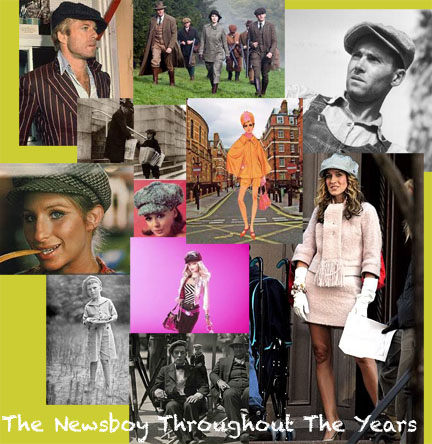
Even Barbara, Barbie and Buster have their Newsboys

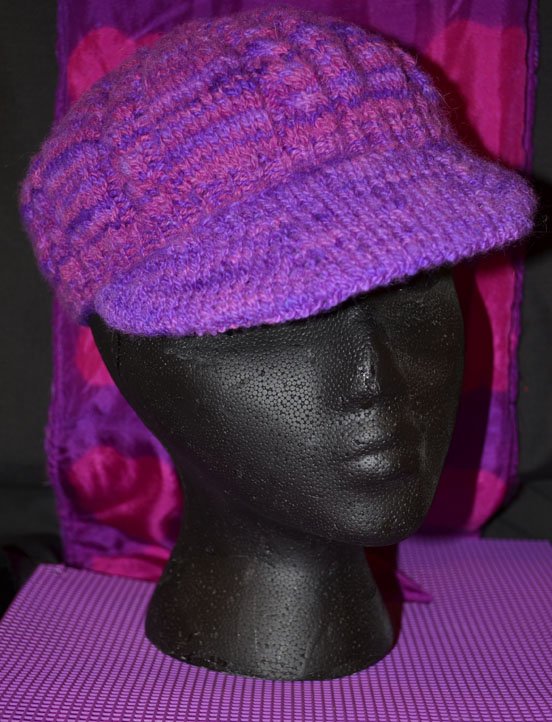
The last item of my knitting trilogy* is the Newsboy hat.  The Newsboy is one of the most iconic hats of the late 19th and 20th century.  This hat goes by many other names: Flat Hat, Gatsby Hat, Gold Hat, Driving Cap, among others.  

Call it whatever name you want, the newsboy is a great looking hat.
 
I have read that this style goes as far back as 14thcentury England.  It has been claimed by every class of people, starting with the working class and eventually taken up by the upper classes as part of the weekend country attire. 
Traditionally, the Newsboy is constructed from eight panels cut from plain wool or tweed.  It is a soft rounded cap with a small brim and a stiffer back.  I have seen versions of the hat with the top snapped down to the brim and remaining free of the brim. 
 Knitted versions abound.  It is no surprise that something this popular would eventually be interpreted by knitwear.  I scouted the Internet for what I thought would be the perfect style and found one.  The newsboy that I knitted was found in Debbie Stoller’s   Stitc’n Bitch Nation (by far not my favorite knitting book-I probably would give it one star). I managed to find it as a used Amazon book.  For me, the total $5 (including shipping) is worth the hat alone.  I will continue to knit this one over and over.
The listed weight of yarn for this hat pattern is worsted.  I used DK, which meant I had to re-adjust the gauge.  This is a good skill to have.  It gives the knitter, more options of yarn, as long as the yarn fits the design. 

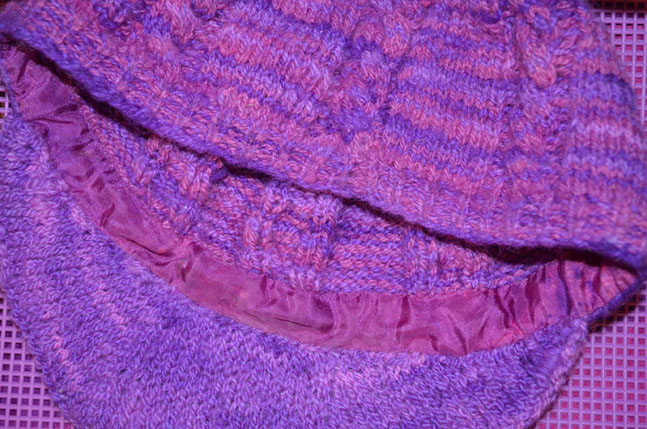
It was very simple to hand stitch the silk along the band of the hat.

The brim is lined with plastic needlepoint canvas that I picked up at Hobby Lobby.  It is stiff but light and I don’t think it will crack.  I took a cue from other mens hats and lined the band with silk.  This silk matched the scarf lining, but grosgrain ribbon would have worked just as well. In fact, any ribbon (at least 1” wide would have worked).  This cap was just fun to knit. And I think it will be great fun to wear.  Happy Knitting!

* The other two items that go with this hat is a scarf and a pair of gloves.

Save

Can’t See The Forest For The Trees-Craft National 2012 & Thought Splatter

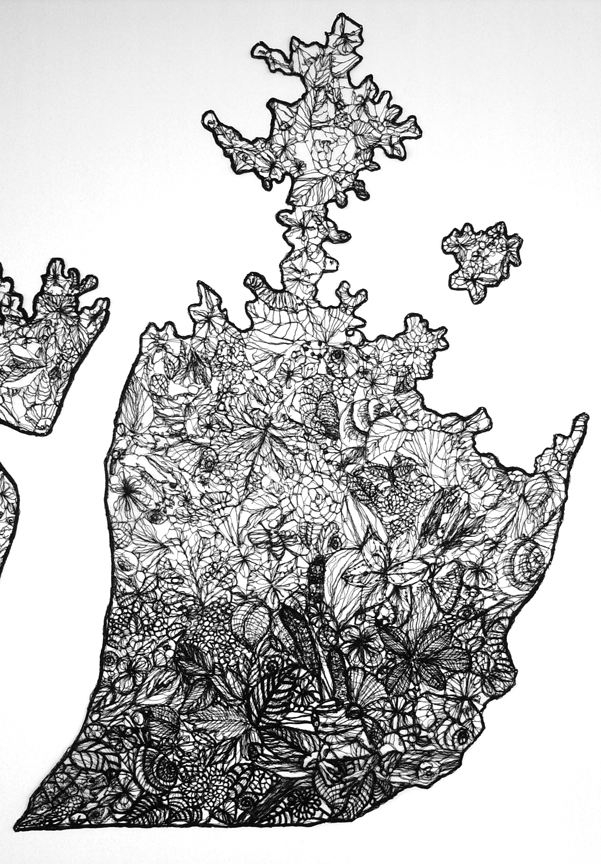
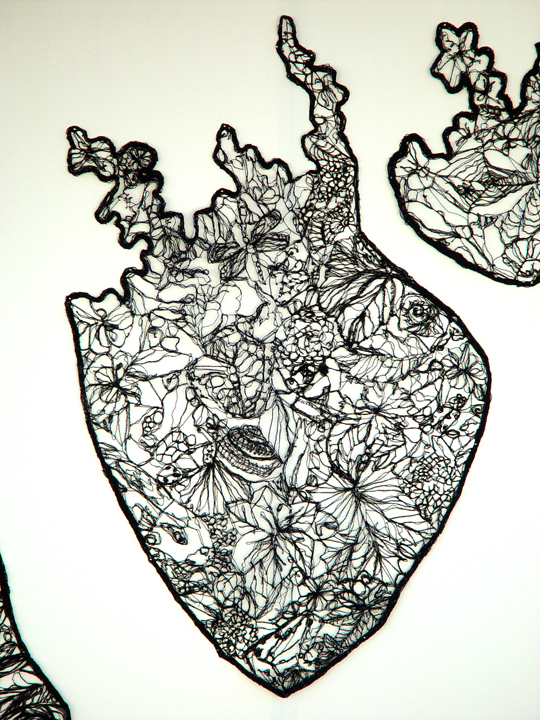
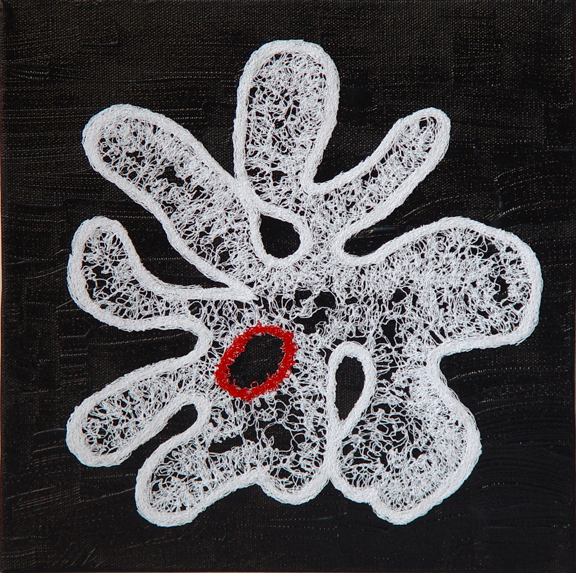
Can’t see the Forest For the Trees. Rachelle Gardner-2012

Two years ago, I gave my youngest daughter a $99 sewing machine so she could sew, mend, and what not. The what not has turned into some incredible stitched visions.  One of them is Can’t See The Forest For the Trees. A link for the process of this technique is:http://rmgardner.wordpress.com/2012/01/18/1115/?utm_source=feedburner&utm_medium=feed&utm_campaign=Feed%3A+rmgardner+%28The+Art+of+Rachelle+M+Gardner%29&utm_content=Google+Feedfetcher.


This piece was accepted into the Crafts National 2012 at the Mulvane Art Museum in Topeka, Kansas.  The exhibition opened May 5th and will run until August 19th. 

______________________________________________________

Rachelle with The Forest. It is  3′ x 9′


Details of work-100% Gütermann thread


New Gallery Work Accepted In this Technique
Earlier this year The Next Gallery in Denver, CO put out a call for artists for its Mind Pool show.  The premise was, “Where streams of consciousness collect. An exhibit of artwork in any medium that was created relying heavily on intuition. When artists allow the element of risk into their creative process, the opportunity for surprise is increased. Sometimes these surprises are called happy accidents.”
 
Rachelle summited  Thought Splatter
Thought Splatter, Rachelle Gardner-2012


Rachelle comments: “Thought Splatter  is a spontaneous work created from intuition, which contrasts from my usual process of careful planning. The pattern of threads is a result of stitching stream-of-conscious writing. Once the stabilizer is dissolved in water, the thoughts becomes unintelligible, forgotten, reflecting the intangible nature of the ever-fleeting thought.” 
Based on my research and as objective as I can be, Rachelle is taking an innovative approach to a traditional craft (lace making).  Hopefully, more installation sized pieces will be created, along with some three dimensional work.
I have the inside skinny that a new “super machine” is on the horizon that will make these ideas a possibility. More on that later…………… 
 

Save

Spinning a Yarn-Borrowing From Vintage (again)

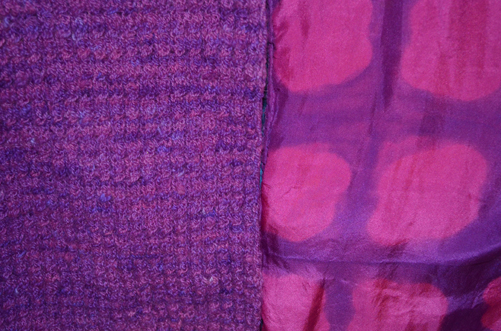
Close up of the finished scarf with it’s silk Shibori lining

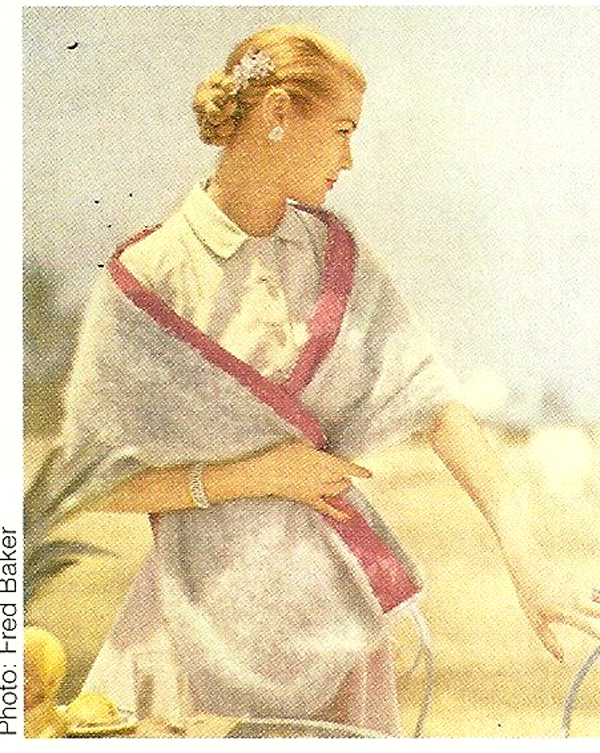
I have always been drawn to the below shawl in my book Vogue Knitting’s Vintage Collection. The pattern combines knitting and sewing, which probably explains the attraction.
Halfway into the “Purple Scarf”, I decided it was a good candidate for the lined option. There were two reasons. The yarn (Shetland that I hand painted) was in my opinion a tad bit scratchy. Choosing the pattern that I did, also contributed. I used the “Mock Cable Rib”* that is found on page 42 of Barbara G. Walker’s A Treasury of Knitting Patterns (this is her 1st Volume).
My first swatch was wonderful. But as the scarf progressed, it was obvious that it was going to be very heavy (especially at the length that my daughter wanted). I thought it could double as a small shawl if needed.
Out came the silk, dye, cut wood pieces, and clamps. It was Shibori time. I had a few lessons to learn about “off the bolt silk”. It shrinks big time. I ruined two linings because they were to short when I got finished. ** Finally, with the third try I got it right.

Cut wood pattern (wrapped in plastic to keep dye from soaking in) clamped to folded dyed silk
The Shibori piece that lines the scarf is a simple dye,resist, and over dye. I used the same dyes that I painted the yarn with. Now it is a double duty piece with some visual interest that it would not have had if I had just left it as a knitted piece.
*Mock Cable Rib
Multiple of 5 sts plus 2
Rows 1 and 3 (Wrong side)-K2, *p3, k2, rep from *
Row 2-P2* k3, p2, rep from*
Row 4-P2 * skip 2 sts and insert needle knit wise into front of 3rd st then taking point of needle in front of the 2 skipped sts,past these sts and around to the right, catch yarn and knit; then sl the 3rdst off left-hand needle over the 2 skipped sts, taking care not to let the skippedsts come off with it; k2, p2; rep from *.
**Sometimes mistakes turn into good things. I turned the botched linings into a scarf that I love wearing. A picture of it can be found here.

Save

Willie Cole-Scorching For the Sake Of Art

Garden (Ozone Summer series). 1991-scorch marks on canvas-94 x 48 in.

Last year the Kemper Museum of Contemporary Art in Kansas City featured Pattern ID. Visually, the exhibition was incredible with a group of artists that spanned the world.  For me, Willie Cole was the favorite.

Willie Cole is best known for assembling and transforming ordinary domestic and used objects such as irons, ironing boards, high-heeled shoes, hair dryers, bicycle parts, wooden matches, lawn jockeys, and other discarded appliances and hardware, into imaginative and powerful works of art and installations.

I have read that as a young man he was fascinated and collected old irons.  Irons shows up  repeatedly in his work.

An audio pod cast of an interview with Willie Cole and “Pattern ID” curator Ellen Rudolph discuss the relationship of pattern to society and its manifestation in art.

Willie Cole  (American, born 1955)
Sunflower, 1994
Willie Cole
Willie Cole
Scorched canvas and lacquer on padded wood
Tampa Museum of Art. Museum
Willie Cole
Pressed Iron Blossom No. 3,
2005 (05-314)
5-color lithograph
35 7/8 x 47 3/4 inches
Collaborating printer: Bill Lagattuta
Edition 22


Save

Good To Go

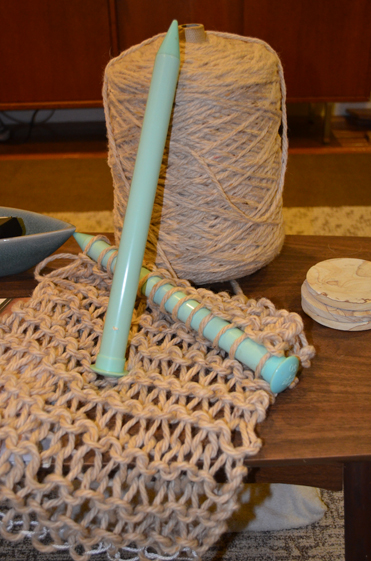
The instructions said to CO 15 stitches with the largest needles using the thickest yarn I had. I think I am good to go. I am knitting as much as I can this weekend, dye it some bright color Sunday night, dry it on Monday, and get to the right people Tuesday.  There is going to be a yarn bombing (well, they call it and installation) and I am going to make a contribution.

Save

Save

Garden Thyme-Hostas, Mason City, and Frank Lloyd Wright

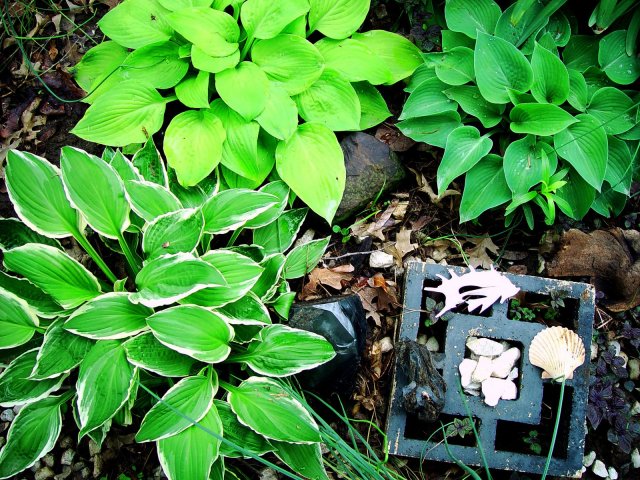
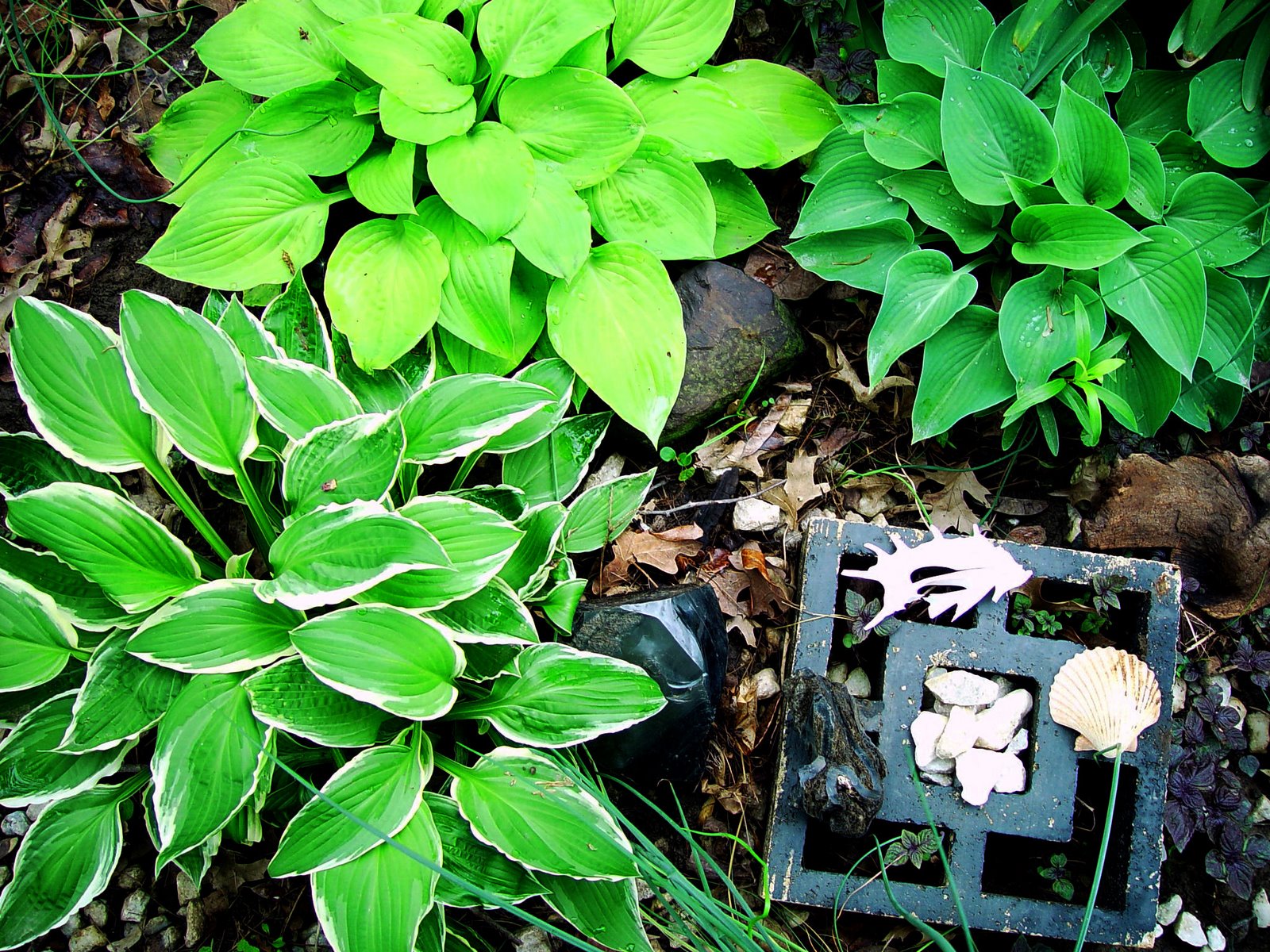
I first fell in love with Hostas in Mason City, Iowa. We were touring the Frank Lloyd Wright Stockman  House, a preserved Usonian house.. All around the property were beautiful huge Hostas with dark blue green leaves.

For years after that, I would buy what ever Hostas Wal-Mart had on sale. Finally, I decided that if I wanted the big blues or “Blue Giants” I would have to search harder. I now have these beauties but it will take a few years for them to reach their full potential.

Hostas have always been faithful plants for me. I ignored them for a few years, and they kept on growing. They don’t get ignored anymore. I have about 30 different types. Some I know names of, some I don’t. Last fall, I planted some miniatures, Stiletto, Pandora’s Box, Little Mouse Ears, and Brimful Cup. I will probably plant more miniatures this fall.

The Stockman House, Mason City, Iowa

Save

Spinning a Yarn-Give Those Hands Some Gloves!


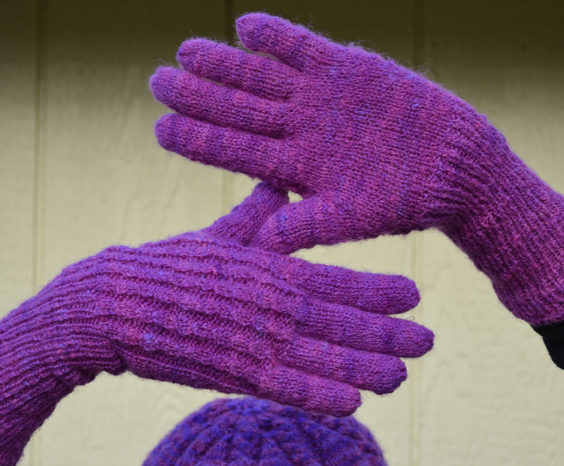
 I decided that after 25 years in knitting, it was time to knit gloves and knit them for my kid.
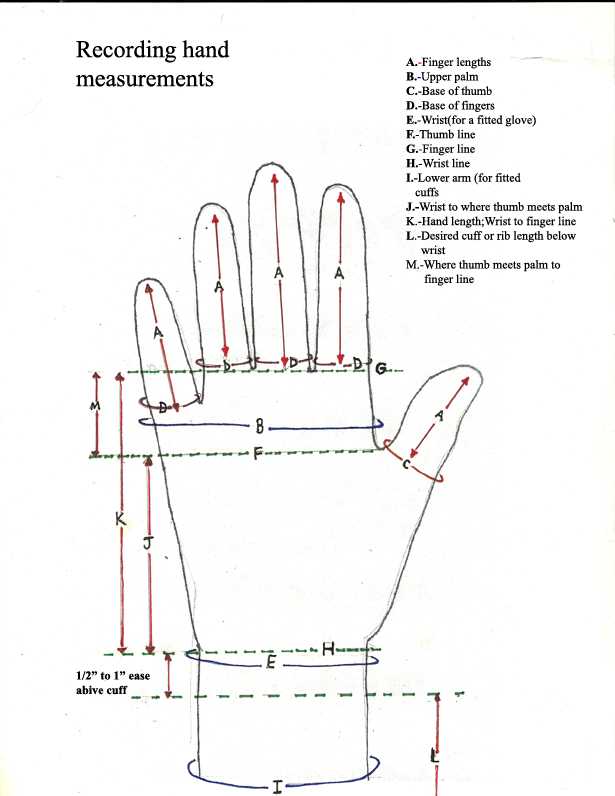
Step one was to trace a hand and take all the appropriate measurements that are needed for a fitted glove.  I then turned to two of my tried and true resources. My two books of reference were Mary Thomas’s Book of Knitting (Dover Press) and an old article from a Threads Magazine book when Threads actually had knitting articles. The good news is that there are still used copies of this book floating around that can be snagged on Amazon. But the book that was the biggest help of all was Ann Budd’s book The Knitter’s Handy Bookof Patterns. This book was invaluable to me. I highly recommend it. 
                                            The Diagram
I would use this diagram with my daughter’s hand measurements to plan and to check my knitting as I went along.  The hand length and finger length were the biggies for me.


Glove Notes
·       Taking an accurate gauge is the trick to having gloves that fit (seems to be true about anything in knitting that needs to fit).
·       I worried about having holes between the fingers during the set up row.  I solved this by actually casting on more stitches than I needed.  On the next round I would K2tog as needed to get back to the correct number.  This step solved the problem and is not noticeable. Or at least I don’t think it is. This is just one of many tips that Ann has in her book about knitting gloves. 
There are a lot of free glove patterns out there. Pages and pages can be found on Ralvery alone. I have just lately downloaded a free glove collection from Interweave. They have many “a gratis” eBooks.  
Happy Knitting!


Save

An Old Survivor

Michael and I have been taken by this tree every time we go to Joplin.  It is on 20th Street just west of RangeLine. Today, we both finally had our cameras with us.  The Home Depot, WalMart and Academy are nearby. This tree is an Osage Orange. By the size of it’s trunk, Michael thinks it is about 75-100 years old.    It is amazing that one single leaf is growing on this tree after what it has been through. But that is Joplin for you, pretty darn amazing.

Save

Design a site like this with WordPress.com
Get started